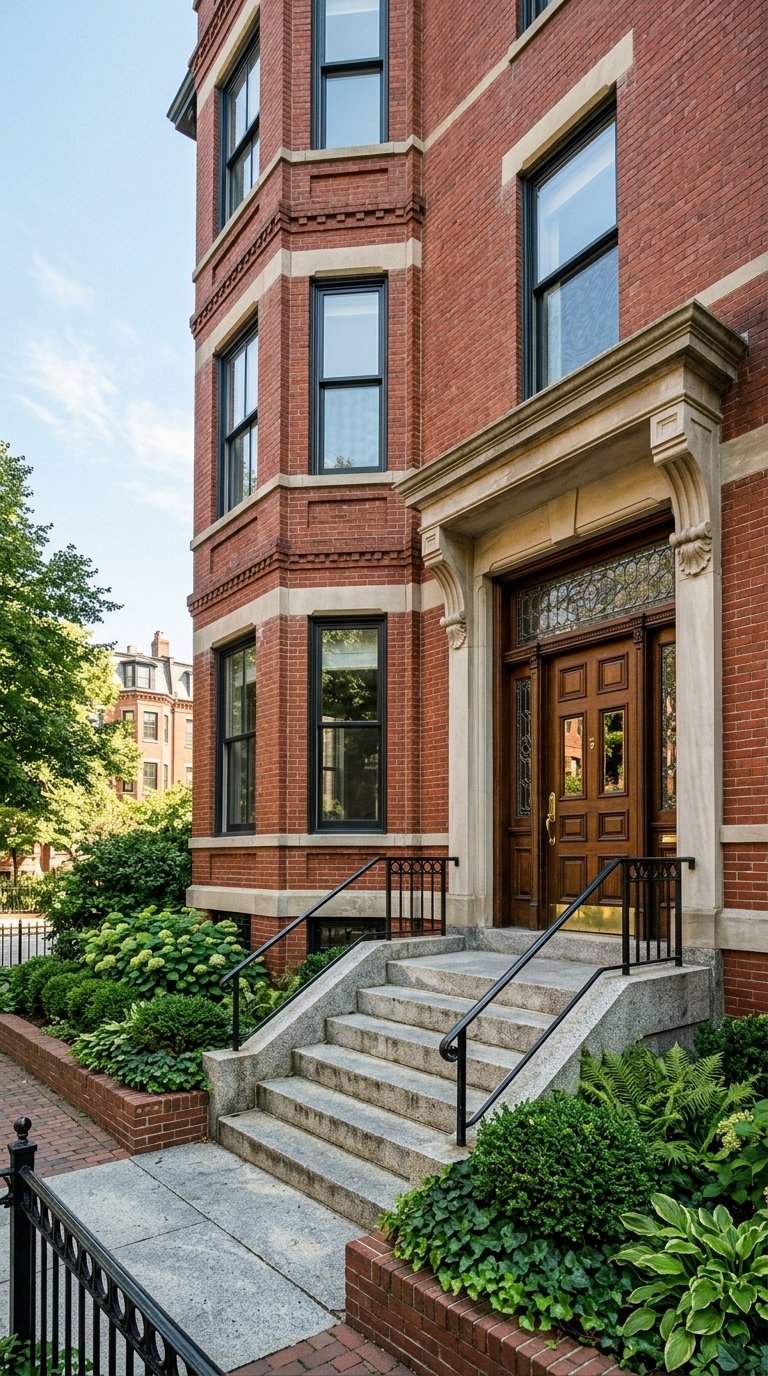
Trying to choose between a condo and a single-family home in Brookline? It is one of the most important housing decisions you can make here, because Brookline offers both urban convenience and suburban privacy in a relatively small footprint. If you are weighing lifestyle, upkeep, location, and budget all at once, this guide will help you sort through the tradeoffs with a Brookline-specific lens. Let’s dive in.
Why Brookline Makes This Choice Different
Brookline is a mature residential community with strong urban features, located about four miles from downtown Boston and covering roughly six square miles. Less than 6% of the town’s land is zoned commercial, so where and how you live can shape your daily experience in a major way.
That local structure helps explain why condo and single-family choices feel so distinct here. Brookline’s housing plan says single-family districts make up 72% of town land, while multi-family areas cluster more closely around commercial centers such as Coolidge Corner, Brookline Village, Washington Square, Chestnut Hill, and parts of Route 9.
There is also a meaningful price gap between property types. The town reports median assessed values of more than $1.5 million for a single-family home and $662,650 for a condo, with a FY2026 residential tax rate of $10.24 per $1,000 of assessed value. In other words, this is not just a style decision. It is also a budget and long-term cost decision.
Condo Living in Brookline
What Condo Ownership Usually Means
In Massachusetts, a condo is privately owned but governed by shared documents such as the master deed, unit deed, bylaws, and state condo law under Chapter 183A. Those documents usually spell out responsibilities for common areas, maintenance, insurance, reserve funds, meetings, voting, and assessments.
For many buyers, the biggest appeal is convenience. Condo living often means less exterior maintenance, shared responsibility for major systems, and an easier lock-and-leave lifestyle if you travel often or simply want fewer household tasks.
The tradeoff is that you are part of a shared governance structure. Rules may affect how you use parts of the property, and exterior changes often require approval from the association, the town, or both.
Where Condos Tend to Fit Best
In Brookline, condos often line up well with a walkable, transit-friendly lifestyle. The town notes that the Green Line C, D, and B branches serve Brookline, along with bus routes including the 66, which connects areas such as Brookline Village and Coolidge Corner.
That is one reason condos tend to feel most natural in or near places like Coolidge Corner, Brookline Village, Washington Square, the Chestnut Hill commercial area, and other mixed-use or transit-oriented parts of town. These areas often make it easier to pair daily errands, dining, transit access, and lower-maintenance living.
It is also worth noting that Brookline condo living is not always high-rise or intensely urban. In many parts of town, condo housing is woven into neighborhood-scale settings that still feel leafy and residential.
Condo Costs to Look At Closely
If you are comparing condos, monthly cost matters as much as purchase price. Condo or HOA dues are usually separate from the mortgage payment, and those dues can range from a few hundred dollars a month to more than $1,000 a month.
That means a lower-priced condo is not always the lower-cost option over time. A building with low monthly fees may still face future assessments or reserve shortfalls, so it is important to look beyond the listing price.
Before you move forward, review:
- Monthly condo fees
- Reserve fund strength
- Recent or planned assessments
- Rules on renovations and use
- Insurance responsibilities
- Maintenance obligations inside and outside the unit
Single-Family Living in Brookline
What Single-Family Ownership Usually Means
A detached single-family home usually gives you more direct control over the property. You typically have greater privacy, more outdoor space, and more say over daily routines, landscaping, and home improvement decisions.
That control comes with more responsibility. When you own a single-family home, you are usually responsible for maintenance and repairs ranging from small issues to major systems, including the roof, exterior, and yard.
In Brookline, that ownership pattern is reinforced by zoning. The town’s housing plan says single-family districts account for 72% of town land, with minimum lot sizes ranging from 4,000 to 40,000 square feet depending on the district. That lower-density pattern is a big reason many detached-home areas feel more private and spread out.
Where Single-Family Homes Tend to Fit Best
Single-family homes usually fit buyers who want more separation from neighbors, more yard space, and a quieter residential setting. In Brookline, that often points buyers toward lower-density residential sections rather than the compact commercial nodes associated with many condo properties.
Chestnut Hill offers a strong example of the detached-home lifestyle in Brookline. Local historic district materials describe mostly residential structures on landscaped lots, with homes set back from the street and substantial trees, which reflects the more private and estate-like feel many buyers seek.
South Brookline also tends to align with a lower-density, more suburban pattern. If your priorities center on space and autonomy, these parts of town often deserve a closer look.
Single-Family Costs and Responsibilities
Single-family homes often mean a larger overall carrying-cost commitment. Beyond the purchase price, you may need to budget for landscaping, snow removal, exterior repairs, and long-term capital items such as roofing, masonry, windows, or drainage.
You may also have more flexibility than in a condo, but not unlimited freedom. The town says many construction, alteration, repair, removal, and demolition projects require permits, and properties in local historic districts may need town review for many exterior changes.
That is why single-family buyers should look at both the house and the rules that apply to it. Zoning, permit requirements, and historic-district status can all affect what you can do in the future.
Condo vs. Single-Family in Brookline
Here is the simplest way to think about it in Brookline: condos usually solve for convenience and location, while single-family homes usually solve for space and autonomy.
| Factor | Condo | Single-Family Home |
|---|---|---|
| Upkeep | Lower exterior maintenance | Full maintenance responsibility |
| Privacy | More shared living environment | More separation and privacy |
| Outdoor space | Usually limited or shared | Usually more private yard space |
| Location pattern | Often near transit and commercial centers | Often in lower-density residential areas |
| Rules | Condo documents and association decisions | Town permits and possible district rules |
| Monthly costs | Mortgage plus condo fees and possible assessments | Mortgage plus direct maintenance costs |
Questions to Ask Yourself First
How Much Upkeep Do You Want?
If you want fewer day-to-day responsibilities, a condo may be the better match. Shared upkeep can free up time and simplify ownership, especially if you travel often or prefer a more lock-and-leave lifestyle.
If you do not mind handling repairs, yard work, and long-term maintenance planning, a single-family home may feel more rewarding. You get more control, but you also take on more of the work.
How Important Are Walkability and Transit?
Brookline stands out for transit access, with Green Line branches and bus service linking several key districts. If you want easier access to shops, restaurants, and public transportation, condo locations may align more naturally with your routine.
If your priority is a more tucked-away residential feel, a detached home may be a better fit. In many cases, you will be trading some walkable convenience for more space and privacy.
How Much Control Do You Want?
Condo ownership involves shared decision-making. That can be a plus if you like a more structured environment, but it can be frustrating if you want broad freedom to alter the property.
Single-family homes usually give you more autonomy, though town rules still apply. If customization and outdoor use are high priorities, that may tip the scale toward a detached home.
What Is Your True Monthly Budget?
In Brookline, it is important to compare total carrying costs, not just the asking price. Condo fees, assessments, taxes, insurance responsibilities, and maintenance can all change the real monthly picture.
The town’s current median assessed values also show how different the entry points can be. With median assessed values over $1.5 million for single-family homes and $662,650 for condos, many buyers start by deciding how much space, privacy, and convenience they want within their comfort range.
A Smart Brookline Buying Strategy
Before making an offer, review the details that shape ownership after closing. For condos, that means studying the association documents, reserve funding, rules, and current financial health.
For single-family homes, that means looking closely at zoning, permit history, and any historic-district status. Those factors can influence future renovation plans, exterior changes, and carrying costs.
In Massachusetts, state guidance also notes that hiring your own attorney may be in your best interest when buying or selling property. That added layer of review can help you understand what you are really buying, especially in a town as nuanced as Brookline.
The right answer is not the same for every buyer. If you are optimizing for convenience, walkability, and lower exterior maintenance, a condo may be your better fit. If you are optimizing for privacy, yard space, and greater control, a single-family home may be worth the added cost and responsibility.
If you are weighing Brookline condos against single-family homes and want guidance tailored to your goals, reach out to Judy Korzenowski for a complimentary consultation and market valuation.
FAQs
What is the main difference between a condo and a single-family home in Brookline?
- In Brookline, condos usually offer lower exterior maintenance and are often closer to transit and commercial centers, while single-family homes usually offer more privacy, more outdoor space, and more direct control over the property.
What costs should Brookline condo buyers review before making an offer?
- Brookline condo buyers should review monthly fees, reserve funds, recent or planned assessments, insurance responsibilities, maintenance obligations, and any rules that affect property use or renovations.
Where are condos most commonly found in Brookline?
- Brookline condos are most commonly found in or near mixed-use and transit-oriented areas such as Coolidge Corner, Brookline Village, Washington Square, the Chestnut Hill commercial area, and parts of Route 9.
Where do single-family homes tend to feel most at home in Brookline?
- Single-family homes tend to fit best in Brookline’s lower-density residential sections, including parts of South Brookline and more estate-like areas of Chestnut Hill.
Do Brookline single-family homeowners still need town approval for some changes?
- Yes. Brookline says many construction, alteration, repair, removal, and demolition projects require permits, and homes in local historic districts may need additional town review for many exterior changes.
Is a condo always the more affordable option in Brookline?
- Not necessarily. A condo may have a lower purchase price, but monthly fees, possible assessments, and building financial health can affect the true long-term cost of ownership.