Ready for more space, but unsure how Newton homes really compare from one village to the next? If you are moving up from a smaller home, condo, or city property, Newton can offer larger houses, more varied lot sizes, and strong transit access, but it is not a one-size-fits-all market. The more you understand about housing stock, architectural character, zoning, and renovation rules, the better prepared you will be to buy with confidence. Let’s dive in.
Newton homes offer range and value
Newton is a high-value suburban market, so upsizing usually means planning for a meaningful budget jump. The U.S. Census Bureau reports a 70.0% owner-occupied housing rate and a median value of owner-occupied homes of $1,264,900. The City of Newton’s FY2026 assessing information lists a median assessed value of $1,503,500 for single-family homes, which gives you a useful local benchmark as you set expectations.
If your goal is more square footage, Newton has a strong base of detached housing. In the city’s 2020 housing snapshot, Newton counted 17,184 single-family units out of 33,054 total housing units. That means single-family homes made up about 52% of the housing stock, which is a notable share for a close-in suburb.
This mix matters because upsizing in Newton does not always mean choosing between only one home type. You may find single-family homes, two-family properties, condominiums, and apartments across the city, depending on your budget, layout needs, and long-term plans.
Village-to-village differences matter
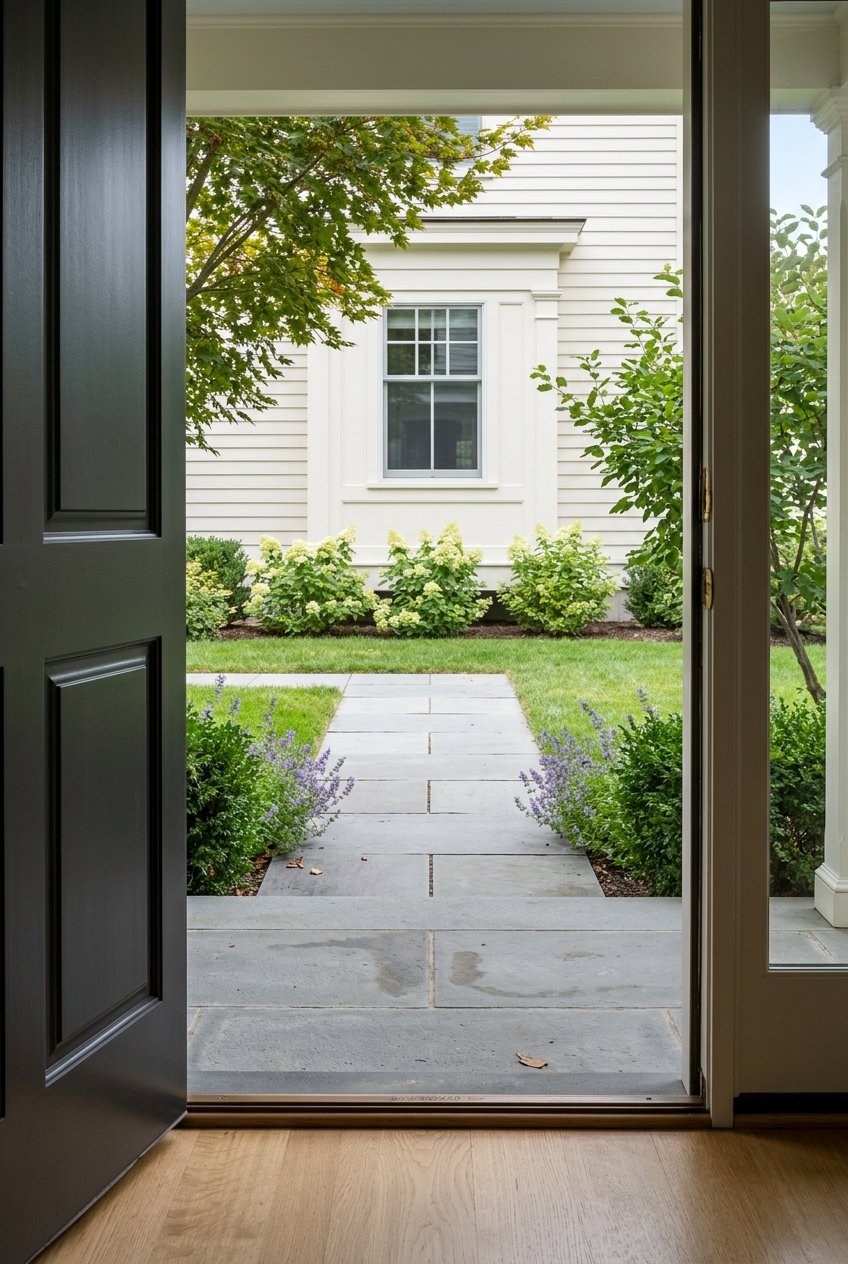
One of Newton’s biggest advantages is variety. The city’s historic preservation materials describe Newton housing as a mix of high-style and vernacular buildings, and many homes have been enlarged or updated over time rather than preserved in only one era. For you as a buyer, that can mean more options in both character and function.
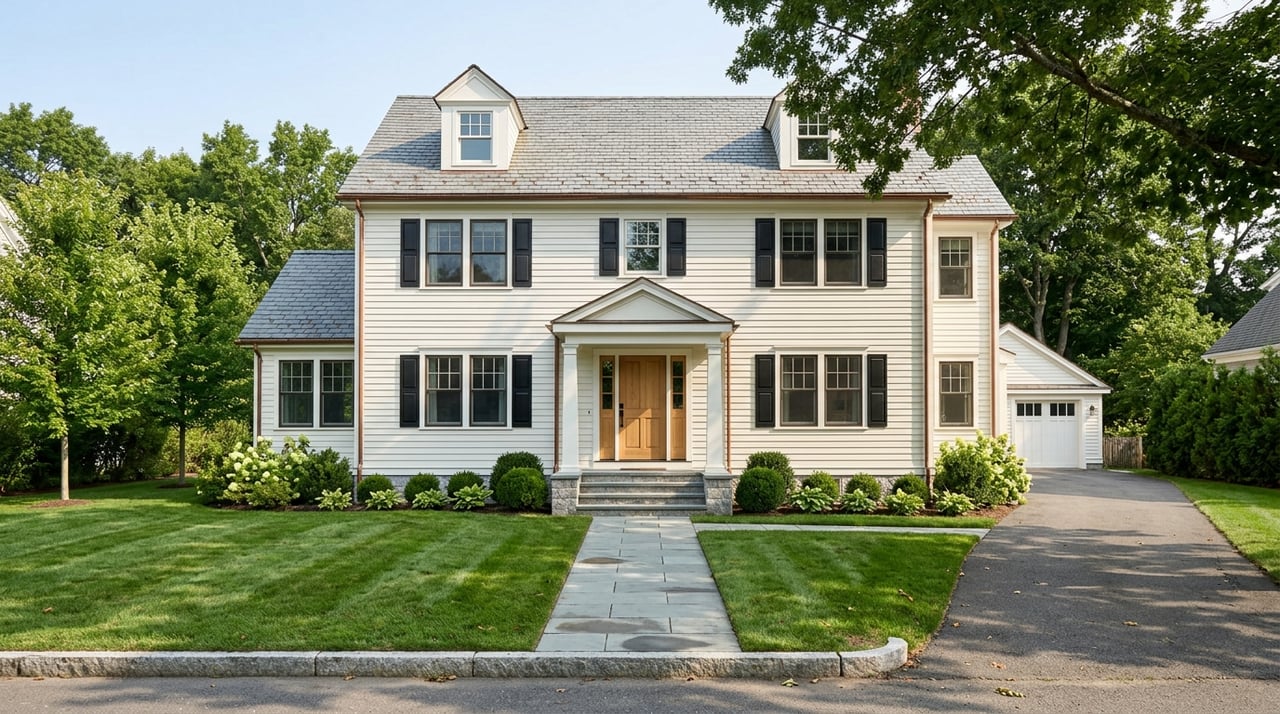
Newton includes homes in styles such as Georgian/Federal, Greek Revival, Italianate, Second Empire, Queen Anne, Colonial Revival, Tudor Revival, Stick, and Shingle Style. That architectural range can make the search exciting, but it also means no two areas feel exactly alike. Street-by-street comparison is especially important when you are looking for more space.
West Newton homes and lot feel
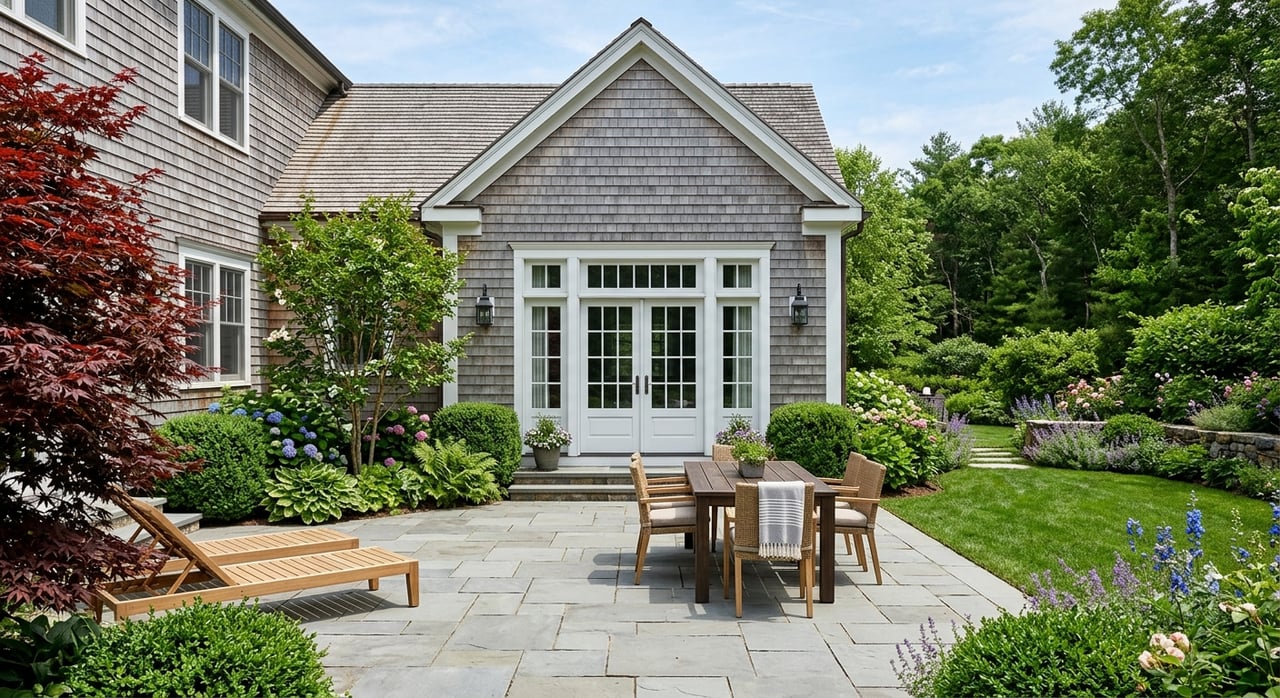
In West Newton, the city describes a pattern of suburban dwellings on generous lots with ornamental trees and gardens. Early commuter homes included simpler Greek Revival and Italianate houses, and later homes often added Second Empire and Queen Anne details. If you want a classic suburban setting with architectural variety, this may shape what you see there.
Chestnut Hill homes and estate influence
In Chestnut Hill, the city notes development after 1880 on large building lots and private estates. Common home styles include Georgian, Colonial Revival, and Shingle Style, with some mid-century modern examples as well. For upsizing buyers, this area may appeal if you are prioritizing lot scale, architectural presence, or a more estate-like setting.
Newtonville homes and detached housing
Newtonville is described by the city as an architecturally important neighborhood with large detached houses on moderate-sized lots. That can be helpful if you want a detached home and solid interior space without necessarily seeking the largest parcels in Newton. It is another example of why local context matters in your search.
Upsizing means more than square footage
When you buy a larger home, it helps to think beyond bedroom count. In Newton, the better question is often how the house, lot, and location work together for your next stage. A beautiful older home may offer charm and room to grow, but layout, lot dimensions, and future project potential can be just as important.
As you compare homes, keep your focus on a few practical factors:
- Current living space and room configuration
- Lot size and outdoor usability
- Potential for additions or accessory space
- Transit and commute options
- Exterior review or historic restrictions on future changes
This approach can help you avoid overpaying for a home that feels large today but limits your options tomorrow.
Zoning and FAR affect expansion plans
If part of your upsizing strategy includes renovating after purchase, Newton’s zoning rules deserve close attention. The city applies floor-area-ratio, or FAR, limits to all one- and two-family structures, and the allowed FAR is tied to lot size. In practical terms, the amount you can build is not just about the house itself. It is also about the parcel and the zoning district.
The city’s FAR table shows residential lot-size bands beginning at 5,333 square feet in SR1 and SR2 districts and 5,199 square feet in MR1 and MR2 districts. SR3 begins at 7,217 square feet, and larger lots allow lower FAR. While this does not create one universal rule for every property, it does show why two homes with similar asking prices may have very different expansion potential.
Newton also provides an additional .02 FAR in certain cases for lots created before December 7, 1953, if the new work meets the newer setback standard and does not create or increase nonconformities. If you are considering a remodel, details like this can affect what is realistically possible.
ADUs add flexibility for larger households
Accessory dwelling units, or ADUs, are now part of the conversation for many upsizing buyers. Newton says any single- or two-family home can add one ADU. New internal or detached ADUs are allowed by right up to 1,000 square feet or 50% of the primary residence, whichever is smaller.
In some cases, internal or detached ADUs can be 1,200 square feet by right under certain conditions. Detached ADUs can reach 1,500 square feet with a special permit. Detached ADUs can also be up to 2.5 stories or 36 feet tall and must meet the setback requirements for a single-family detached home in that district.
For you, that can create useful flexibility. Depending on the property and your plans, an ADU may support multigenerational living, guest space, or a more adaptable long-term layout.
Older homes may need added review
Newton’s housing character is part of its appeal, but older homes can come with additional layers of review. The city states that any property more than 50 years old is subject to Historic Review for exterior alterations. That means even straightforward exterior plans may need another level of evaluation.
There are also location-specific considerations. Properties in Auburndale, Chestnut Hill, Newtonville, or Newton Upper Falls require Historic District Commission review for any exterior changes and site changes. If you are buying with plans to alter the exterior, this should be part of your due diligence from the start.
Newton also defines partial demolition as the removal, alteration, or envelopment of 50% or more of any single elevation or roof surface. That definition can become very important if you are weighing a major addition, substantial redesign, or teardown alternative.
Commute options can support daily life
Upsizing often changes more than your home. It can change how you move through your week, from commuting to local errands to weekend travel. Newton stands out because it offers several transit options across different villages.
The city says the Green Line D branch serves Riverside, Woodland, Waban, Eliot, Newton Highlands, Newton Centre, and Chestnut Hill. Commuter rail service on the Framingham/Worcester line serves Auburndale, West Newton, and Newtonville. Local bus service is also available on numerous routes, including 52, 57, 59, 60, 501, 504, 505, 553, 554, 556, and 558.
For shorter trips, Newton has 15 Bluebikes stations, and the Charles River Reservation shared-use paths connect Newton to Waltham, Watertown, Cambridge, and Boston. The Census Bureau lists Newton’s mean travel time to work at 26.6 minutes, which supports its role as a suburb with multiple commuting modes rather than a car-only pattern.
Transit areas may keep evolving
Newton’s transit-oriented locations may continue to change over time. The city states that Newton is fully compliant with the MBTA Communities Law as of March 2025 after adopting the Village Center Overlay District. While every street will not change in the same way, this suggests that development pressure may continue to focus around transit and village centers.
For buyers, that can matter in both practical and long-term ways. A home near a village center may offer convenience and access today, while also sitting in an area shaped by continued planning activity. If you are deciding between a quiet residential street and a location closer to village amenities, it helps to think about both your current routine and your future priorities.
How to shop Newton strategically
The smartest way to approach an upsizing move in Newton is to think in layers. Start with housing type, then compare lot and renovation rules, and finally weigh commute fit. That framework can keep you focused when two homes look similar online but function very differently in real life.
A practical shortlist might include questions like these:
- Does this home give you enough space now without forcing an immediate renovation?
- Does the lot support a future addition, subject to zoning?
- Is an ADU part of your long-term plan?
- Will historic review affect the updates you want to make?
- Does the village location fit your day-to-day travel patterns?
In a market like Newton, more space is only part of the value. The best move-up purchase is usually the one that balances size, setting, flexibility, and location in a way that still works for you years from now.
If you are weighing your next move in Newton and want grounded, street-level guidance on which homes truly fit your goals, Judy Korzenowski can help you evaluate options with the care, local insight, and high-touch service a move-up purchase deserves.
FAQs
What should upsizing buyers know about Newton home prices?
- Newton is a high-value market. The Census Bureau reports a median value of owner-occupied homes of $1,264,900, and the City of Newton lists a median assessed value of $1,503,500 for single-family homes as a local benchmark.
What should buyers know about Newton single-family housing stock?
- Newton has a substantial single-family base. In the city’s 2020 housing snapshot, 17,184 of 33,054 housing units were single-family homes, or about 52% of the total.
What should buyers know about Newton home styles?
- Newton includes a wide mix of home styles, including Georgian/Federal, Greek Revival, Italianate, Second Empire, Queen Anne, Colonial Revival, Tudor Revival, Stick, and Shingle Style homes.
What should buyers know about Newton renovation rules?
- Newton applies FAR limits to one- and two-family homes based on lot size, and exterior changes to properties over 50 years old are subject to Historic Review. Some areas also require Historic District Commission review for exterior and site changes.
What should buyers know about Newton ADU rules?
- Newton allows one ADU in any single- or two-family home. New internal or detached ADUs are generally allowed by right up to 1,000 square feet or 50% of the primary residence, whichever is smaller, with some larger options allowed in certain cases.
What should buyers know about commuting from Newton?
- Newton offers Green Line, commuter rail, bus, Bluebikes, and shared-use path access. Service varies by village, so your best fit depends on where you want to go most often.